
Matthew Perry died of ‘acute effects of ketamine’ – what you need to know about the drug

Matthew Perry. s_bukley/Shutterstock

Philip Crilly, Kingston University

Millions of people worldwide were left devastated by the death this year of 54-year-old Matthew Perry, the Friends star famous for bringing wise-cracking Chandler Bing to life. A global superstar, recently sober with an autobiography on the bestseller lists, it looked like his troubled past was behind him. So the world was especially shocked and saddened to learn of his untimely death by apparent drowning.

This week, medical officials in Los Angeles, have confirmed that his drowning was more complex than initially suspected. Toxicology reports have indicated that two drugs were in Perry’s system at the time of his death. These were buprenorphine, a drug used to treat opioid drug addiction, and ketamine, sometimes referred to as special K or horse tranquilliser.

Given Perry’s well-documented addiction issues to opioid painkillers, his use of buprenorphine was not a surprise. But why was he taking ketamine?

Ketamine works by acting on receptors in the brain and, since its synthesis in the 1960s, has been used in veterinary medicine and also as a surgical anaesthetic in humans.
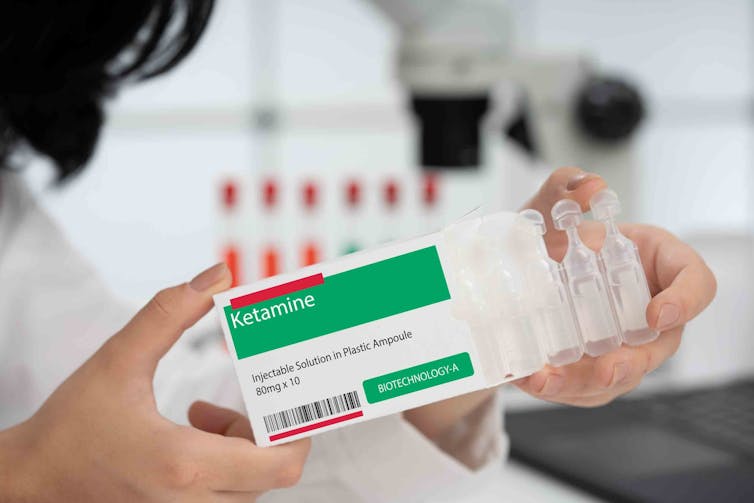
Medical person holding ampoules of ketamine
Ketamine is used as an anaesthetic in humans. luchschenF/Shutterstock

Following signs that ketamine might affect user mood, it was investigated for its potential role in treating depression and anxiety. Today, users can be prescribed ketamine for these conditions, but usually only after other antidepressant and anti-anxiety medications have failed.

The medical officer in LA specified that Perry was being legally prescribed infusions of ketamine to treat depression and anxiety. They did note, however, that given the time since his last dose, it was unlikely that the ketamine in his bloodstream was from his prescribed infusions. No other reason was offered as to why he would have had ketamine in his system so close to the time of his death.

In addition to finding drugs in his body, Perry was also listed as having heart disease. Ketamine can cause an increase in blood pressure and heart rate, so it is not surprising to hear from the medical examiner that: “At the high levels of ketamine found in his post-mortem blood specimens, the main lethal effects would be from both cardiovascular overstimulation and respiratory depression.”

Another contributing factor to Perry’s death was listed as drowning. So does ketamine make drowning more likely?

Ketamine can cause users to have issues with coordination, and they may feel disorientated. The combination of these effects while in water, can make a person’s reactions slower, putting them at risk of harm, so ketamine certainly could make drowning more likely.

Also, taking ketamine with other substances, like alcohol, can increase the risk of drowsiness. While Perry had a much-publicised issue with alcohol, his toxicology report indicated no alcohol in his system at the time of his death.

Not the first

Sadly, Perry is not the first Hollywood star to die by drowning under the influence of drugs. In 2012, global star Whitney Houston died in a bathtub after consuming marijuana, cocaine, and the benzodiazepine known as alprazolam (Xanax).

These stories remind us all of the dangers of substance abuse and the importance of seeking professional help for addiction issues.

Matthew Perry was a vocal advocate for more addiction support services, and since his death the Matthew Perry Foundation has been set up to help those struggling with the disease of addiction.

Perry said: “When I die, I don’t want Friends to be the first thing that’s mentioned, I want helping others to be the first thing that’s mentioned. And I’m going to live the rest of my life proving that.”

In the last years of his life, he did just that. But sadly, it seems that it will be in death that he will have the biggest impact on helping others to overcome their demons.

Philip Crilly, Senior Lecturer in Pharmacy Practice and Digital Public Health, Kingston University

This article is republished from The Conversation under a Creative Commons license. Read the original article.
Four NHS-approved mental health support apps

With #mentalhealthawarenessweek drawing to a close it’s worth taking a look at the free mobile apps available to support those living with a mental health condition. The following apps are NHS-approved. None of the apps listed are intended to replace medical advice and if you are concerned about your or someone else’s mental health you should seek medical attention.

  1. Chill Panda

Google Play or Apple App store

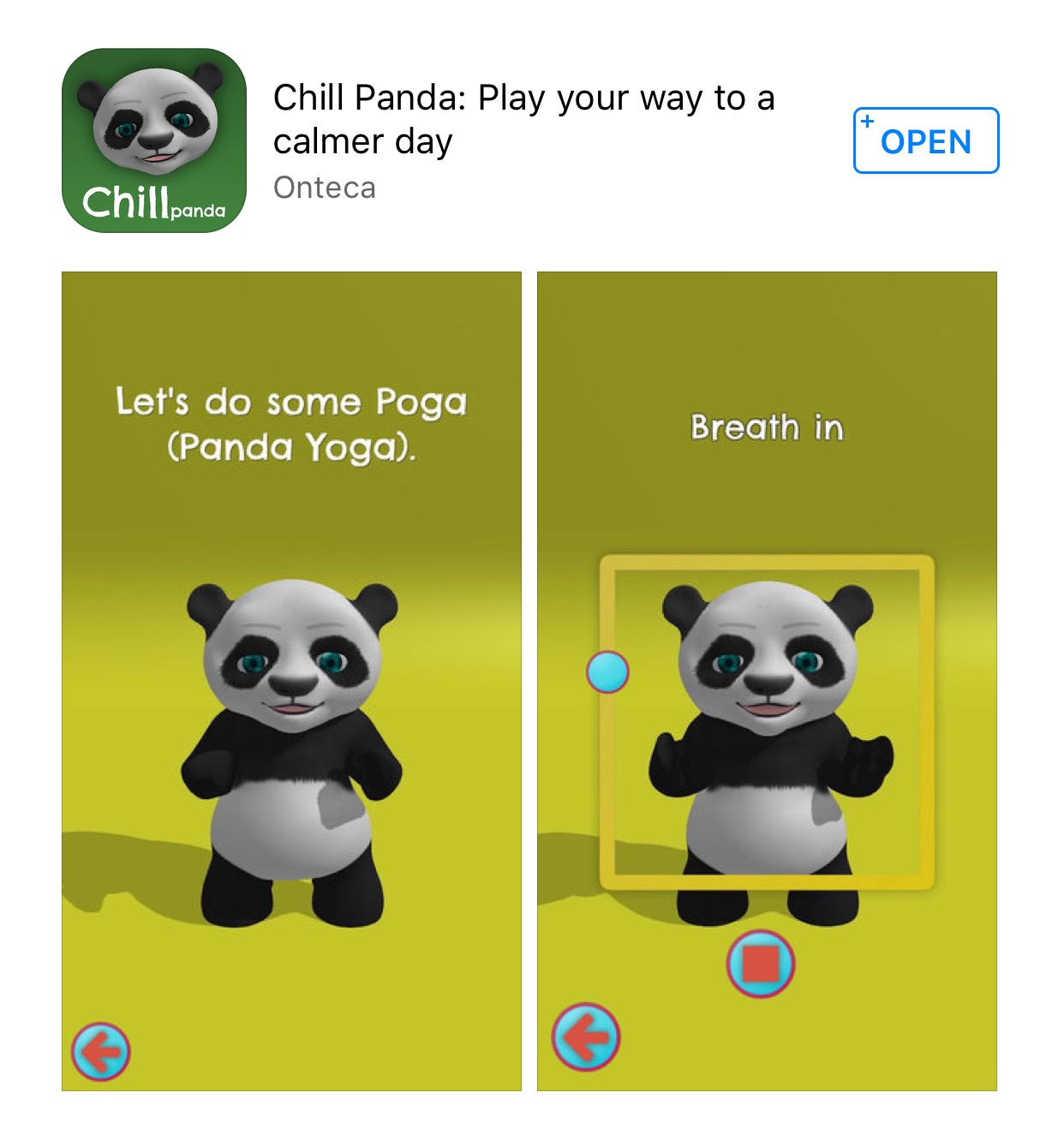
This fun app is mainly aimed at children and adolescents but those of us who are young at heart may also enjoy using it. The central character is, you guessed it, a Panda, chosen because of its calm and peaceful nature. Developed by a clinical psychologist, it is a fun way to relax and distract yourself when feeling stressed and anxious. The app has a number of supportive features under the banners of Feel, Chill, Do and Play.

Feel – Placing your finger over your smartphone camera allows the app to take your heart rate. You are then promoted to say how stressed or anxious you are feeling using a sliding scale. Based on your heart rate and response, the Panda will then recommend some activities to make you feel better.

Chill – As the name would suggest this section is designed to help you relax. Through the use of square breathing exercises, you breathe in and out at a steady rate in time with the Panda. This will slow your heart rate and help you feel more in control of your breathing.

Do – keeping active is well-documented as a way to reduce stress and anxiety and this has been incorporated into Chill Panda. This section prompts you to do light exercise and stretching as well as “Panda Yoga”. The exercises can take as little as 5-minutes to complete – enough time to help you feel relaxed again.

Play – Two games within the app are intended to distract you from whatever it is you are anxious about. The “Painter” game is based on the concept of colour therapy, encouraging you to be creative by colouring in a number of different templates. The “Panda on point” game involves tilting your phone to get the Panda to a certain point on screen. It’s a fun distraction and great way to put a smile back on your face.

Chill Panda also has some useful information, for adults and children, about what anxiety is and helpful tips on how to manage it.

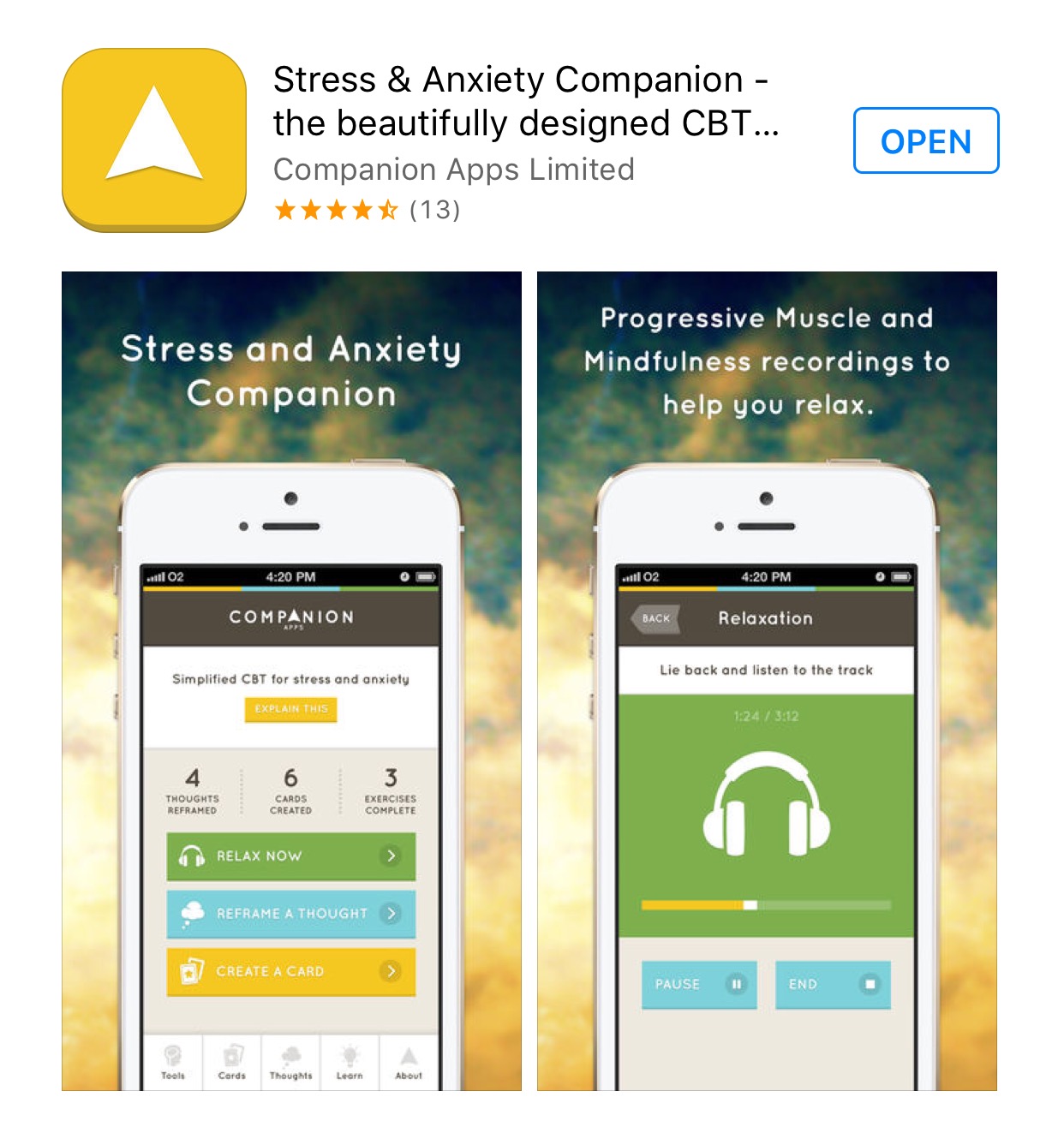
  1. Stress and Anxiety Companion

Apple App store

This great little app helps you to control your breathing, relax, reframe your negative thoughts and develop new techniques to manage stress and anxiety.

The home screen welcomes you with a number of choices: Relax now; reframe a thought; or create a card.

Relax now – Find a quiet space to lie down and listen to a number of recorded relaxation exercises.

Reframe a thought –Identify a negative thought that you are having. Now identify what triggered this thought. Give as much detail about the negative thought as you can and rate how anxious it is making you feel. The next step is to think of a new, more realistic, thought that you could use instead. Going through this process helps you to think realistically about your fears and concerns and helps you to stop catastrophising them.

Create a card – The app allows you to create positive affirmation cards, with beautiful, scenic backgrounds to admire.

In addition, there are also breathing tools and distraction brain games e.g. count down from 1000 in sevens until you reach zero or practice your times tables. These games can interrupt negative thinking. There is also a section to learn more about anxiety, relaxation techniques and the impact of diet, exercise and sleep on anxiety levels.

  1. Catch It

Google Play or Apple App store

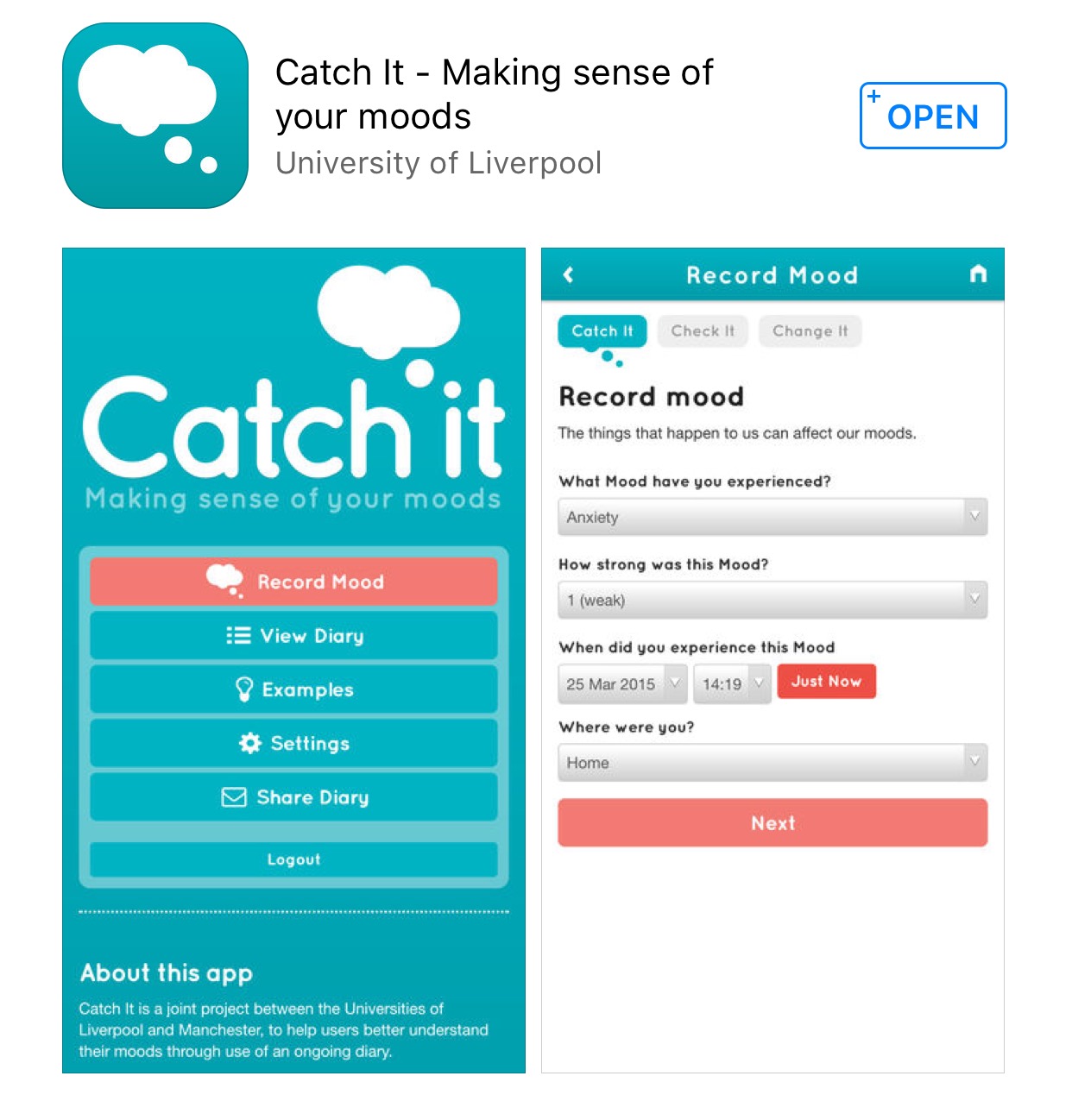
Similar to the Stress and Anxiety Companion this app encourages you to challenge negative thought processes. When logging in for the first time you are prompted to create a pin. This ensures that no one can see your private thoughts. The app encourages you to think through your negative thoughts in 3-stages: Catch it; check it; and change it.

Catch it – record details of your mood at a particular time – what mood are you experiencing? How strong is the mood on a scale of 1-5 (5=strongest)? When and where are you experiencing this mood? What happened or what prompted you to feel this way? What were you thinking about just before this mood game on? Answering all of these questions helps you to identify your mood triggers so that you can do something about them.

Check it – Read over what you’ve written in the Catch it section and think of different ways that you could look at the situation

Change it – Now, what would be a more helpful thought process? Write it down and then rate how your mood changes from the start.

  1. FearFighter

Google Play or Apple App store

FearFighter is a 9-step cognitive behaviour therapy (CBT) course designed to be completed over 9 weeks. It contains videos, questionnaires and tools to help those people suffering from any form of panic or phobia to overcome these. Each step takes around 50 minutes to complete and the app recommends that you complete each step fully at one time. The course aims to teach you a wide range of coping skills and techniques to help you through times when you are feeling particularly scared or anxious.

All of the apps listed above have their own unique benefits. They are all free so download them all and see which one you prefer. These tools are available to support you to feel better so why not get started today?